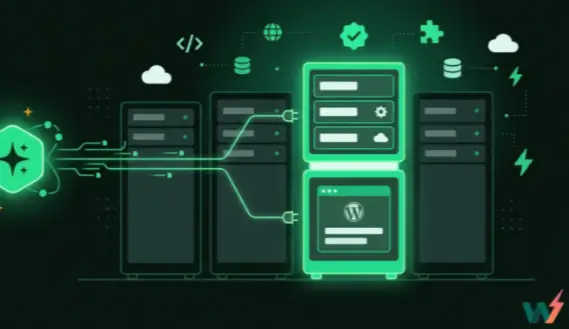

A website migration between hosting providers follows a structured, data-driven process. It begins with baseline assessments of current infrastructure, performance metrics, and dependencies. Planning covers tasks, timelines, and rollback procedures. The destination is prepared with provisioning, security controls, and configurations. Data, mail, and routing are migrated with encryption and versioned backups. Staging changes and validating routes minimize downtime, while verification, testing, and optimization metrics determine post-migration readiness. The next steps hinge on concrete results and measurable targets.
What Happens During a Hosting Migration
During a hosting migration, the process begins with a comprehensive assessment of current infrastructure, including server configurations, dependencies, data volumes, and performance baselines. The evaluation maps interdependencies, identifies bottlenecks, and quantifies resource needs.
Migration planning translates findings into tasks, timelines, and rollback procedures. Revenue impact and risk assessment are tracked, ensuring transparent metrics, traceable changes, and controlled sequencing for minimal downtime.
How to Prepare the Destination Environment
In preparing the destination environment, the focus shifts from assessment to concrete provisioning and validation activities that enable a smooth cutover.
Resource sizing, network isolation, and service provisioning align with security auditing workflows, ensuring compliance checkpoints are met.
Configuration baselines support repeatable deployments, while SEO considerations guide caching, header configurations, and sitemap validation for minimal impact post-migration.
See also: theblogblueflamepublishing
Migrating Files, Databases, and Email Routing
A disciplined migration strategy enumerates transfer methods, synchronization windows, and rollback procedures.
Data integrity checks and encryption address security considerations, while versioned backups enable rapid restoration.
Routing changes are staged, ensuring minimal mail and service disruption, with audit trails supporting accountability and traceability.
Verifying, Testing, and Optimizing Downtime
How can downtime be verified, tested, and optimized to minimize service impact during a hosting provider migration?
The process maps measurable thresholds for site reliability, latency, and error rates, with synthetic and real-user tests staged pre-cutover.
Data integrity checks ensure complete replication, rollback criteria defined, and monitoring dashboards trigger alerts; post-migration validation confirms performance targets and minimizes sustained downtime.
Frequently Asked Questions
What About DNS Propagation Delays After Migration?
DNS propagation may take up to 48 hours, though TTL redesign, DNS caching behavior, and TTL optimization can shorten it; SSL renewal timing and IPv6 portability must align across both sources for smooth transition and minimal downtime.
Can I Migrate With Zero Downtime?
A 99.9% uptime claim accompanies zero-downtime migration under careful planning; however, migration pitfalls exist. The data-driven process emphasizes synchronized DNS, hosting integration, staged cutovers, and rollback procedures to minimize risk and ensure seamless transition.
How Are Large Databases Staged for Transfer?
Staging large databases involves extracting data, applying data compression, and transferring in parallel streams; error handling is automated, with checksums and retries. The process emphasizes resilience and speed, enabling freedom-driven scalability while ensuring integrity across migration windows.
What Security Measures Protect Data in Transit?
Like a vault door sealing, data in transit benefits from rigorous safeguards. data encryption and transport layer security protect packets; secure authentication prevents imposters; network segmentation limits exposure. Processes enforce encryption, keys, auditing, and continuous risk assessment for freedom.
How Do I Rollback if Something Goes Wrong?
In case of issues, a migration rollback is executed, preserving snapshots and DNS states; downtime mitigation is prioritized through staged rollback, rapid failover, and verification workflows, ensuring data integrity while restoring services with minimal disruption for the freedom-seeking operator.
Conclusion
Despite all the meticulous planning, the migration unfolds exactly as predicted: a flawless blueprint meets the stubborn reality of servers, DNS TTLs, and unexpected cache hiccups. The data moves, emails reroute, and downtime remains the quantifiable, almost comforting constant. Post-migration dashboards confirm improvements, or at least stability—proof that engineering can tame chaos with checklists, verifications, and rollback plans. Irony served: precision parries paradox, and users enjoy seamless continuity while teams crunch one more metric.